
The Question Every Homeowner Asks First
You've been dreaming about a new kitchen for months — maybe years. You've browsed Pinterest boards, visited showrooms, and finally decided it's time. But before you commit, there's one question that stops almost every homeowner in their tracks: how long is this actually going to take?
It's a fair question. Your kitchen is the most-used room in your home. It's where you cook dinner, help the kids with homework, and gather with friends on weekends. Living without it — even temporarily — requires real planning. Here in Pembroke Pines, where families are busy and schedules are tight, understanding the timeline upfront makes the difference between a stressful experience and a smooth one.
Let's walk through what a realistic kitchen remodel timeline looks like, phase by phase, so you can plan your life around the renovation instead of the other way around.
The Short Answer
A typical kitchen remodel takes 6 to 12 weeks from demolition to completion. A minor refresh — think new countertops and cabinet refacing — can wrap up in 3 to 4 weeks. A full gut renovation with layout changes, new plumbing, and electrical work usually lands closer to 10 to 12 weeks.
But those numbers only tell part of the story. The planning and design phase that happens before construction starts is just as important — and often takes 4 to 8 weeks on its own.
Phase 1: Planning and Design (4–8 Weeks)
This is where the magic starts, and rushing through it is one of the biggest mistakes homeowners make. During this phase, you'll:
- Meet with your contractor to discuss your goals, budget, and must-haves
- Finalize the layout and design
- Select materials — cabinets, countertops, tile, flooring, fixtures, and appliances
- Obtain any necessary permits from the City of Pembroke Pines
Material selection is often the most time-consuming part. Custom cabinets, for example, can take 4 to 6 weeks to fabricate and deliver. Countertop materials like quartz or granite need to be templated after cabinets are installed, adding another layer of scheduling. The more decisions you make early, the fewer delays you'll face once construction begins.
Pro Tip
If you're working with a remodeling company that handles design and construction under one roof, the planning phase tends to move faster. There's less back-and-forth between separate designers, suppliers, and builders.
Phase 2: Demolition (2–5 Days)
Once permits are approved and materials are ordered, it's time to tear out the old kitchen. Demolition is fast — usually just a few days. Your contractor will remove old cabinets, countertops, flooring, backsplash, and sometimes walls if the layout is changing.
This is the messiest part of the project, but a good crew will contain dust and debris as much as possible. If you're staying in the home during the remodel (most Pembroke Pines families do), set up a temporary kitchen station in another room with a microwave, mini fridge, and coffee maker. You'll thank yourself later.
Phase 3: Rough Work — Plumbing, Electrical, and Framing (1–2 Weeks)
If your new kitchen layout moves the sink, adds an island with electrical outlets, or requires upgraded lighting, this is when that work happens. Plumbers and electricians rough in new lines behind the walls before everything gets closed up.
This phase also includes any structural changes, like removing or modifying a wall to open up the kitchen to the living area — a hugely popular request in South Florida homes built in the 1990s and 2000s.
Inspections are required after rough work is complete, and scheduling those with the local building department can add a day or two to the timeline.
Phase 4: Drywall, Painting, and Prep (3–5 Days)
With rough work approved, walls get patched or replaced with new drywall, then primed and painted. This phase moves quickly but needs to be done carefully — the finish on your walls sets the stage for everything that comes next.
Phase 5: Cabinet Installation (3–5 Days)
Cabinets are the backbone of your kitchen, and installing them correctly is critical. Whether you're going with brand-new custom cabinetry or refreshing your existing boxes with new doors and hardware through cabinet refacing, this step requires precision.
Proper installation ensures doors align, drawers glide smoothly, and everything is level — which matters more than you'd think in older Pembroke Pines homes where floors and walls aren't always perfectly square.
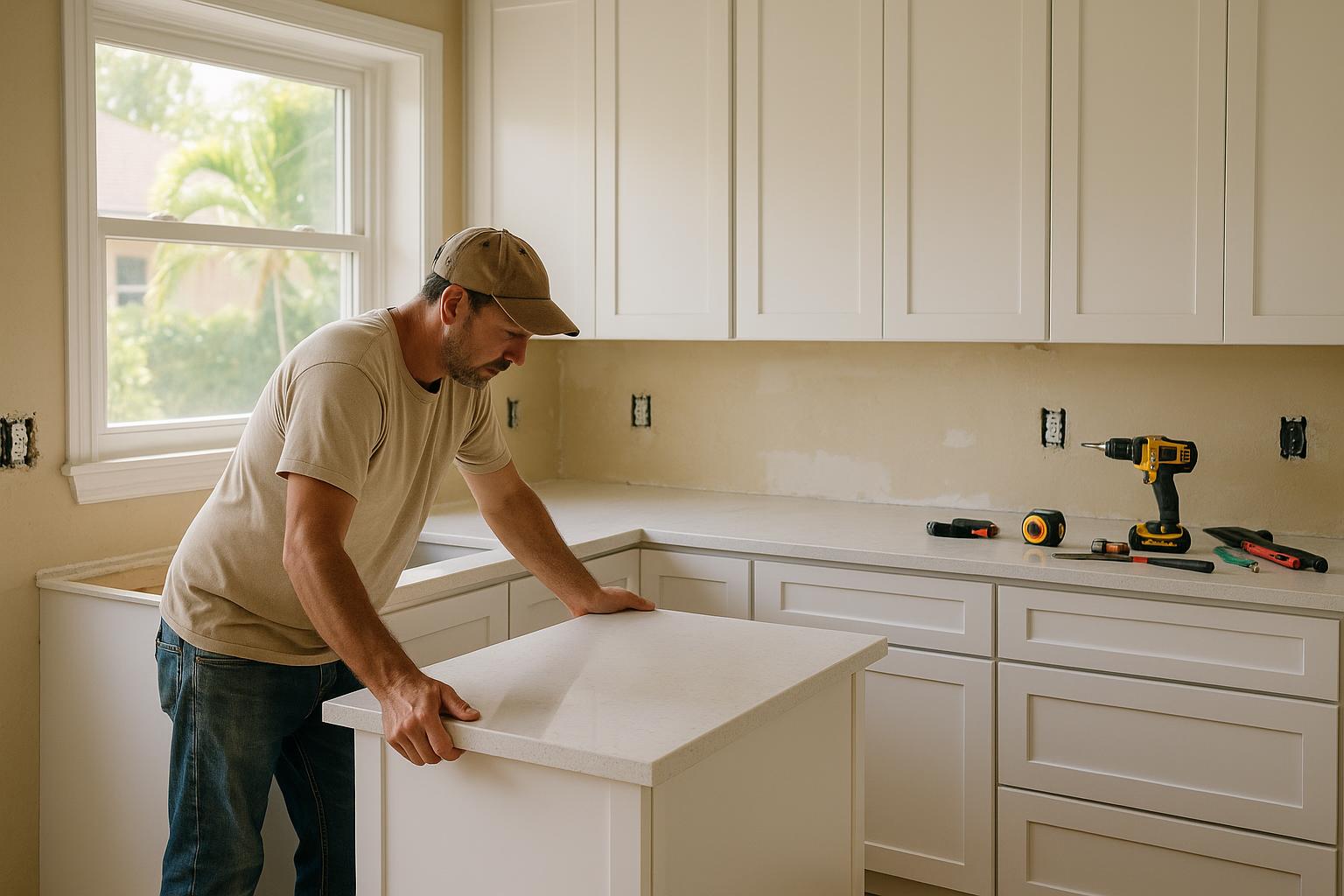
Phase 6: Countertop Fabrication and Installation (1–2 Weeks)
After cabinets are set, the countertop fabricator comes to template your surfaces. They measure every angle and cutout precisely, then fabricate the slabs at their shop. This process typically takes 7 to 10 business days, and it's one of the phases homeowners find most frustrating because it feels like nothing is happening.
But patience pays off. When those countertops are finally installed, your kitchen starts to look like the finished product — and it's an incredible feeling.
Phase 7: Backsplash, Flooring, and Finishing Touches (1–2 Weeks)
Now comes the fun part. Tile backsplash goes up, new flooring gets laid, and fixtures are installed — faucets, lighting, outlets, and hardware. Appliances are set in place and connected. Final paint touch-ups happen. Every detail gets inspected and adjusted.
This is the phase where your kitchen transforms from a construction zone into the room you've been imagining.
What Causes Delays?
Even with the best planning, delays can happen. The most common culprits include:
- Material backorders: Supply chain issues can push delivery dates, especially for specialty items
- Permit and inspection scheduling: Municipal timelines are outside your contractor's control
- Change orders: Deciding mid-project to switch your tile or add undercabinet lighting adds time
- Unexpected discoveries: Water damage, mold, or outdated wiring behind walls can require additional work
The best way to minimize delays? Choose your materials early, make decisions and stick with them, and work with a contractor who communicates proactively about scheduling.
How to Survive a Kitchen Remodel
Living through a renovation doesn't have to be miserable. Here are a few tips from families we've worked with across Pembroke Pines and the surrounding communities:
- Set up a temporary kitchen in your dining room or garage with basic essentials
- Plan simple meals — slow cooker recipes, salads, and takeout from local spots
- Keep kids and pets away from the work zone for safety
- Ask your contractor for a weekly schedule so you know what to expect each day
- Remember the end result — a few weeks of inconvenience leads to years of enjoyment
Ready to Start Planning?
Understanding the timeline is the first step toward a stress-free kitchen remodel. At Refuge Foundation Contractors, we walk our clients through every phase before a single cabinet is removed. We provide clear schedules, honest estimates, and consistent communication from start to finish.
If you're a homeowner in Pembroke Pines, Miramar, Hollywood, Cooper City, Davie, or Weston and you're thinking about transforming your kitchen, we'd love to have a conversation. No pressure, no surprises — just honest guidance from a team that takes pride in doing things right.